"Left of Bang" in Trucking: How Proactive Safety Could Save Lives and Expose Negligence
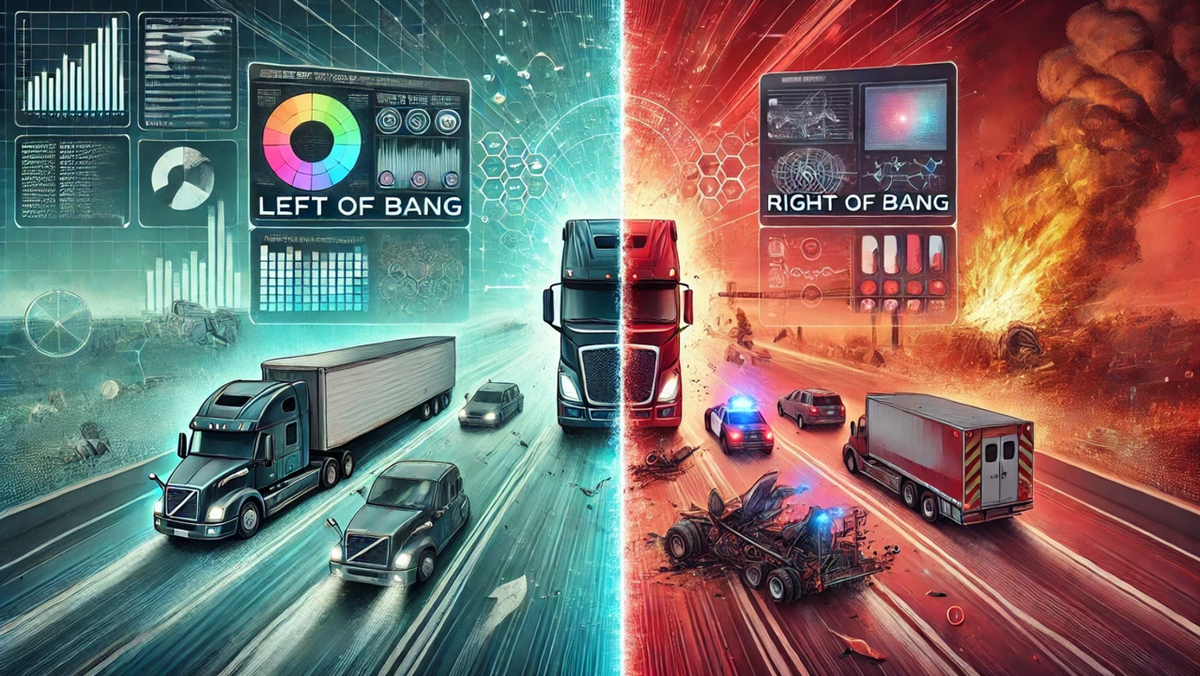
If a trucking company truly embraced the Left of Bang philosophy, it would proactively identify and mitigate risks in driver behavior and equipment maintenance before those risks lead to catastrophic crashes.
In Left of Bang: How the Marine Corps' Combat Hunter Program Can Save Your Life, authors Patrick Van Horne and Jason A. Riley introduce a proactive approach to threat detection and situational awareness. Developed from the Marine Corps’ Combat Hunter Program, the book teaches readers how to recognize subtle behavioral and environmental anomalies—warning signs that indicate danger before an attack or crisis occurs. The core philosophy is simple but powerful: the further left of bang you operate on a timeline, the better your chances of preventing disaster.
While the book was designed for military and law enforcement use, its principles have far-reaching applications beyond the battlefield. The trucking industry, for example, overwhelmingly operates right of bang, reacting to accidents and safety failures only after they occur. This reactive mindset is at the core of many trucking lawsuits, where plaintiffs typically assert two bases of liability: (1) the trucking company’s vicarious liability for the conduct of its driver, and (2) the company’s independent fault for negligent hiring, training, supervision, and retention—failures that are fundamentally left of bang issues. If a trucking company truly embraced the Left of Bang philosophy, it would proactively identify and mitigate risks in driver behavior and equipment maintenance before those risks lead to catastrophic crashes. The failure to do so is not just a missed opportunity for accident prevention—it’s the foundation of liability when companies knowingly allow unsafe drivers and equipment on the road.
How a Trucking Company Could Operate Left of Bang in Driver & Equipment Safety
To adopt a Left of Bang mindset, a trucking company would need to build a system that establishes a baseline of safe operations, continuously monitors for anomalies, and makes proactive interventions before an accident happens.
1. Establishing the Baseline: What Does Normal, Safe Operation Look Like?
Before you can spot risks, you need a clear picture of what a "safe" trucking operation looks like. This would include:
- Driver Behavior: A baseline for what a well-trained, alert, and compliant driver looks like on the road.
- Vehicle Performance: A baseline for properly maintained trucks, with regular inspections and diagnostics.
- Operational Standards: Policies that define safe driving speeds, rest schedules, reaction times, and handling of hazardous conditions.
2. Identifying Anomalies: Warning Signs of Impending Problems
Once the baseline is set, trucking companies should look for deviations—small signs of trouble that could lead to a catastrophic event if ignored. These anomalies could include:
- Driver Fatigue & Stress Indicators
- Frequent lane departures or erratic braking captured by onboard telematics.
- Logbook inconsistencies or violations of Hours of Service (HOS) rules.
- Unusual biometric indicators if companies use in-cab monitoring (e.g., eye tracking for drowsiness, heart rate monitors).
- Increased customer complaints or delivery errors.
- Mechanical & Equipment Red Flags
- Repeated minor maintenance issues on the same truck (suggesting systemic problems or a driver ignoring signs of wear).
- Brake wear or tire degradation picked up by predictive maintenance software.
- Unusual fuel consumption rates that indicate potential mechanical inefficiency or overuse of engine braking.
- Behavioral & Cultural Issues
- Drivers skipping pre-trip inspections or falsifying maintenance records.
- A history of close calls, minor collisions, or near-misses without corrective action.
- A culture that prioritizes delivery speed over safety.
3. Taking Proactive Action Before an Incident Occurs
This is where most trucking companies fail—they wait until after a crash to act. A Left of Bang company would implement interventions before accidents happen:
- Real-Time Driver Coaching & Intervention
- AI-based telematics can alert drivers (and dispatchers) to risky behaviors (e.g., hard braking, sharp turns, excessive idling).
- Instead of waiting for a crash, a company could mandate real-time intervention, such as automated rest breaks or required training after certain warning signs.
- Predictive Maintenance
- Instead of waiting for a breakdown, companies should use data-driven maintenance scheduling that predicts failures before they occur.
- Automated diagnostic alerts can be used to pull trucks from service before a mechanical failure occurs on the road.
- Driver Risk Profiling & Early Intervention
- Identify patterns of unsafe behavior before they result in crashes.
- If a driver has repeated speeding violations, hard braking incidents, or erratic driving behavior, require additional training, coaching, or even probationary monitoring.
- Develop a structured warning system that doesn’t just punish drivers after an incident but actively works to prevent one.
- Creating a Culture of Prevention, Not Reaction
- Instead of firing drivers after a crash, a Left of Bang approach would emphasize early safety mentorship programs.
- Shift from a punitive approach (firing drivers post-crash) to a proactive risk management system that corrects unsafe behaviors before they escalate.
- Encourage a near-miss reporting system where drivers are incentivized to report hazards or unsafe conditions without fear of retaliation.
How This Ties Into Tort Litigation
- Negligence Arguments: A plaintiff can argue that a trucking company operating Right of Bang is negligent by failing to use available technology and best practices to prevent harm.
- Rebutting the "Unavoidable Accident" Defense: Showing that there actually are companies that successfully operate Left of Bang undercuts a defense argument that the crash was solely driver error, their most common strategy.
- Industry Standards & Comparative Liability: If a company fails to adopt Left of Bang measures while competitors do, it strengthens the argument that their safety practices are substandard.
Final Takeaway
A Left of Bang approach in trucking would revolutionize driver and equipment safety, moving the industry from reactive crisis management to proactive accident prevention. It’s a model that prioritizes early warning systems, real-time intervention, and predictive safety measures—and it could serve as a powerful litigation framework to expose negligence when companies fail to act before disaster strikes.
I’d be willing to bet that if you frame this approach in litigation, you’ll put some companies on the defensive fast. It forces them to justify why they chose to ignore red flags when technology and data could have prevented a crash.